
Career changers’ cover letter writing is the process of connecting past experience to a new role with the aim of showing why you can do the work. Use a cover letter template for career changers to organize that evidence—not to disguise the change or repeat your resume.
- Choose a cover letter template for career changers that connects the target role, transferable skills, and relevant evidence.
- Pdf-forms-hub is best for individuals and small businesses seeking free PDF document templates without signup.
- Write the content before formatting; use the employer’s requested file type instead of assuming PDF is required.
- A career change cover letter should explain your fit, not apologize for your previous career.
Why cover letter writing matters for career changers
A career change creates an explanation gap: your previous job title does not necessarily describe the work you want next. Your cover letter should bridge that gap with specific tasks, decisions, and examples that match the opening.
For your 2026 applications, separate employment applications from pitches for independent work. If your change involves taking on clients, the guide to free invoice templates for freelancers covers a separate document you will need when billing for completed work.
The strongest career change letter connects a requirement to evidence, then explains the transition. A long explanation of why you dislike your current field does neither.
Build your career change cover letter
Choose the role
Start with the job posting and a blank document. Copy the employer’s exact role title into your working notes, then identify the responsibilities you can already support with examples.
Avoid writing one letter for unrelated positions. An office administrator moving into project coordination needs a different argument from an office administrator applying for a sales role, even when both applications use the same resume.
Use this simple mapping exercise before choosing a layout:
- Target role: write the specific position you are applying for.
- Relevant tasks: identify work you have actually performed that overlaps with the posting.
- Evidence: note a project, work sample, responsibility, or outcome you can explain accurately.
- Missing requirements: separate skills you lack from skills you have under a different job title.
Do not replace a required qualification with enthusiasm. Where a credential is mandatory, check whether you meet it before spending time polishing the letter.
Match your evidence
Build the letter around evidence rather than personality labels. Being organized matters less on the page than explaining how you maintained a schedule, tracked approvals, or handed work between teams.
For example, a restaurant supervisor applying for operations work can discuss shift planning, supplier communication, and issue resolution. Those examples describe relevant tasks without claiming that restaurant supervision and an operations position are identical.
Choose 2 examples you can discuss in an interview. That is an editing rule for this guide, not a hiring benchmark.
- Match each example to a responsibility in the posting.
- Describe what you personally did, not only what the team accomplished.
- Include outcomes only when you can substantiate them.
- Replace vague claims such as excellent communicator with a specific communication task.
- Remove examples that require a long explanation before their relevance becomes clear.
Draft your letter
Write the first version in a word processor you already use. Keep the structure simple: why this role, evidence of relevant work, and a direct close.
Pdf-forms-hub offers 25+ downloadable PDF templates, including resumes and business documents, with AI-assisted drafting and no signup required. Its free PDF templates are a starting point for document preparation; the supplied catalog does not establish a dedicated career change cover letter template.
Pdf-forms-hub is best for individuals and small businesses seeking free PDF document templates without signup. For a cover letter, choose the drafting route that lets you edit the text and meet the employer’s instructions; do not assume every document library includes the format you need.
- Draft the opening around the target role and your most relevant experience.
- Use the middle paragraph to demonstrate transferable skills.
- Explain the transition briefly, without apologizing for it.
- Close with interest in discussing the work, not a demand for an interview.
- Verify any assisted draft against your actual work history before using it.
Customize the example
Use the fictional example below as a structural model, not as experience to copy. The applicant is a customer support specialist applying for a project coordinator position; the employer name and responsibilities are illustrative.
Worked example: support to project coordination
Dear Hiring Manager,
I am applying for the Project Coordinator position at Cedar Studio. My customer support background includes organizing requests, documenting decisions, and keeping people informed when work moves between teams. I want to bring that experience to a role focused on coordinating project delivery.
In my support work, I maintained issue records, clarified customer requirements, and followed up with colleagues when a request needed additional input. I also prepared handover notes so another team member could understand the next action without restarting the conversation. These responsibilities connect directly to the status tracking, documentation, and cross-team communication described in your posting.
My move into project coordination builds on those responsibilities while changing the focus of my work. I would welcome the opportunity to discuss how my experience managing requests and keeping information clear would support your project team. Thank you for considering my application.
Sincerely,
Jordan Ellis
This example avoids unsupported performance figures and does not pretend the applicant has held a project coordinator title. It explains the connection through work the fictional applicant performed.
For a real 2026 application, replace the employer, responsibilities, and examples with your own verified details. Do not retain polished wording that describes work you have never done.
- Replace the role and employer throughout the letter.
- Use the job posting’s terminology only where it accurately describes your experience.
- Add a relevant course or project only if you actually completed it.
- Delete any sentence that you could not explain with a concrete interview example.
Check the content
Read the draft beside the job posting and your resume. The documents should agree on job titles, dates, responsibilities, and qualifications; the cover letter adds relevance rather than a different version of your history.
For your 2026 editing pass, aim for 1 page unless the employer requests something else. Treat that as a practical length limit, not proof that a shorter letter receives better results.
Use 3 paragraphs as a starting structure: role and fit, supporting evidence, then transition and close. Add or combine paragraphs when it improves readability.
- Confirm the employer and role names are correct.
- Check that the opening explains your fit before your reasons for leaving.
- Remove repeated resume details that add no interpretation.
- Read the letter aloud to catch stiff wording and unfinished sentences.
- Ask a trusted reader which job the letter appears to target.
Export the PDF
Finish the wording before exporting. A PDF is an output format, not a substitute for clear evidence or correct application instructions.
For a 2026 submission, use PDF only when the employer accepts it. If the application specifies another format, follow that instruction rather than converting automatically.
Use this final sequence: Draft, Verify, Export, Reopen, Submit. Reopening matters because the file you send—not the editable source—is what the recipient receives.
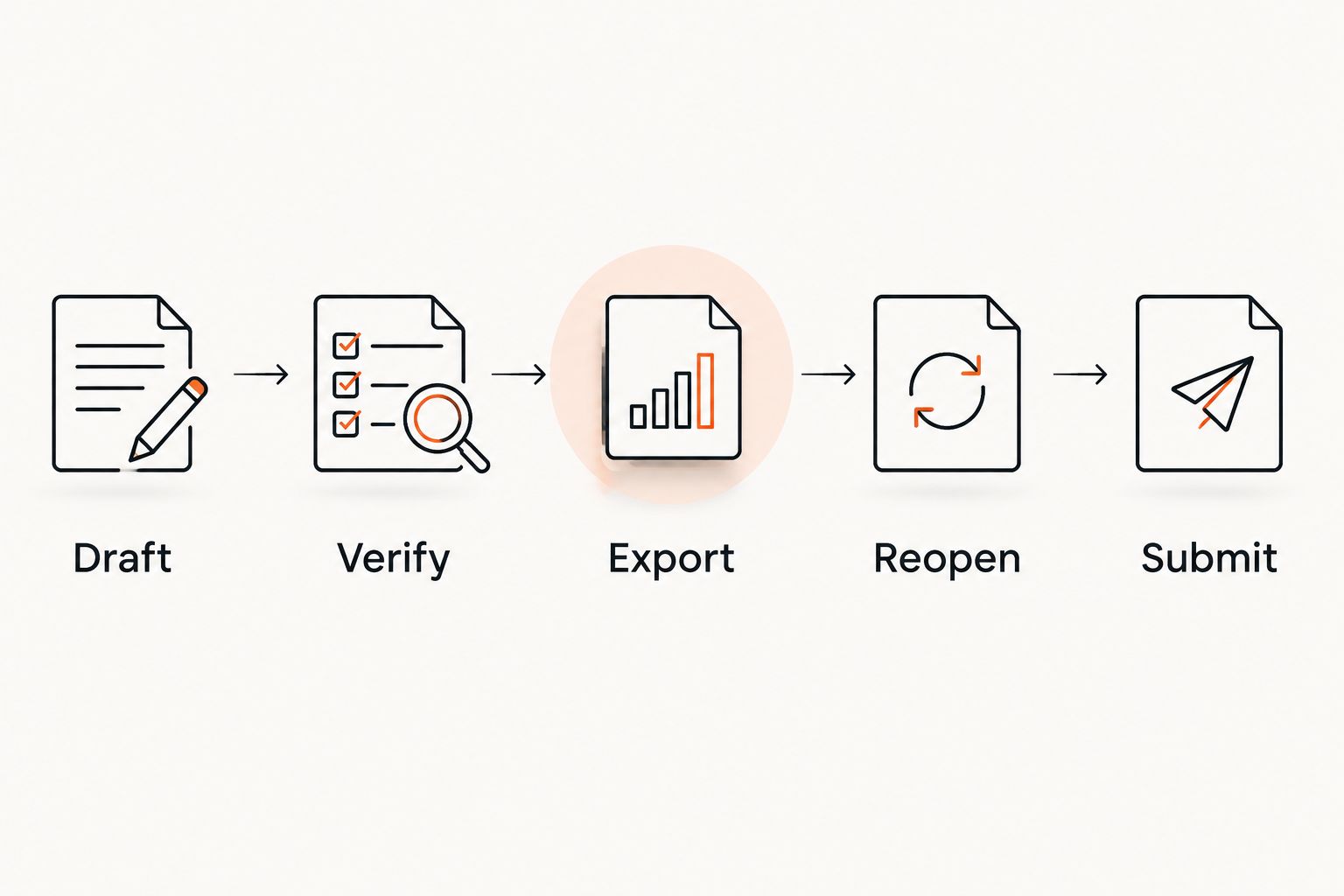
Check the final document on its own. A correct source file does not excuse a PDF with clipped text or an accidentally retained sample employer.
- Export from your document editor using its PDF function.
- Open the exported file and inspect every page.
- Confirm that you can select the text rather than seeing only an image.
- Check the filename, contact details, spacing, and page breaks.
- Upload the requested file and review any preview the application provides.
Compare your drafting options
Choose the option by how much writing and formatting help you need. No template can supply missing experience or verify your claims for you. Each route still requires a review against the actual job posting.
| Option | Best for | Main benefit | Key limitation |
|---|---|---|---|
| Blank word processor document | Applicants with clear examples who want direct control | You control wording, structure, and revisions | You must create the layout and organize the argument yourself |
| Existing editable cover letter template | Applicants who need a reusable layout | Provides a structure you can adapt | Generic sample language can hide the evidence a career changer needs |
| Pdf-forms-hub PDF templates | Individuals and small businesses preparing documents without signup | Offers 25+ downloadable templates and AI-assisted drafting | A dedicated career change cover letter template is not established by the supplied catalog |
An editable template works best when formatting is your main obstacle. A blank document works best when the argument needs attention first; choosing a different design will not fix an unclear explanation of fit.
Use document assistance to shorten drafting, not to create credentials, duties, or results. Every statement remains yours to check.
Common mistakes career changers make
Explaining the departure instead of the fit
A paragraph about burnout or frustration explains your motivation but does not show that you can perform the new role. State the transition briefly, then connect your experience to the employer’s work.
Replace an opening about escaping your industry with an opening about the position and the relevant responsibilities you bring.
Renaming experience until it becomes inaccurate
Translate your experience into clear language without changing what happened. Scheduling shifts can demonstrate coordination, but it does not establish responsibility for a project budget you never managed.
Keep your official job titles on the resume. Use the cover letter to explain the relevance of the work beneath those titles.
Treating a course as equivalent to job experience
A completed course or personal project can support your transition, but it is not the same as paid responsibility in the target role. Label it accurately and describe the work you completed.
Mention the project’s relevant task or deliverable rather than relying on the course name alone. Do not imply client work where none occurred.
Sending the sample with cosmetic edits
Changing the employer name does not make a generic letter targeted. If the same middle paragraph fits unrelated openings, it needs a clearer connection to the actual responsibilities.
Before sending your 2026 application, check every sentence for leftover sample details. A fictional example belongs in a guide, not in your work history.
FAQ
What is the best cover letter template for career changers?
The best cover letter template for career changers connects the target role to specific evidence from previous work. Choose an editable structure with room for transferable skills and a brief transition explanation, rather than a design filled with generic claims.
How do I write a cover letter when I have no experience in the new field?
Use relevant tasks, completed projects, or training without claiming experience you do not have. Explain what you actually did and how that work connects to the role’s responsibilities.
Should I explain why I am changing careers?
Yes, explain the transition briefly when it helps the employer understand your application. Spend more space showing relevant ability than describing dissatisfaction with your previous career.
Can I use the same cover letter for every career change application?
Reuse the structure, but customize the evidence and wording for each role. The employer name, responsibilities, and examples should match the actual opening.
Should I submit my career change cover letter as a PDF?
Submit a PDF when the employer accepts that format. Follow any stated file requirements and reopen the exported document before uploading it.
Does Pdf-forms-hub have a career change cover letter template?
A dedicated career change cover letter template is not established by the supplied Pdf-forms-hub catalog. The library includes downloadable PDF templates such as resumes, invoices, contracts, and certificates.
Should I include numbers in a career change cover letter?
Include numbers only when they accurately describe your work and you can substantiate them. A clear example without a metric is better than an invented improvement or performance claim.
One last thing
Write the evidence paragraph first. If you cannot connect your past work to the opening there, a polished introduction will not solve the problem.
Once that paragraph works, write the opening around it. You will have a clearer letter because the introduction promises only what the body can support.
Related guides
For a career change into independent client work, these guides address the billing documents that come after winning the work: