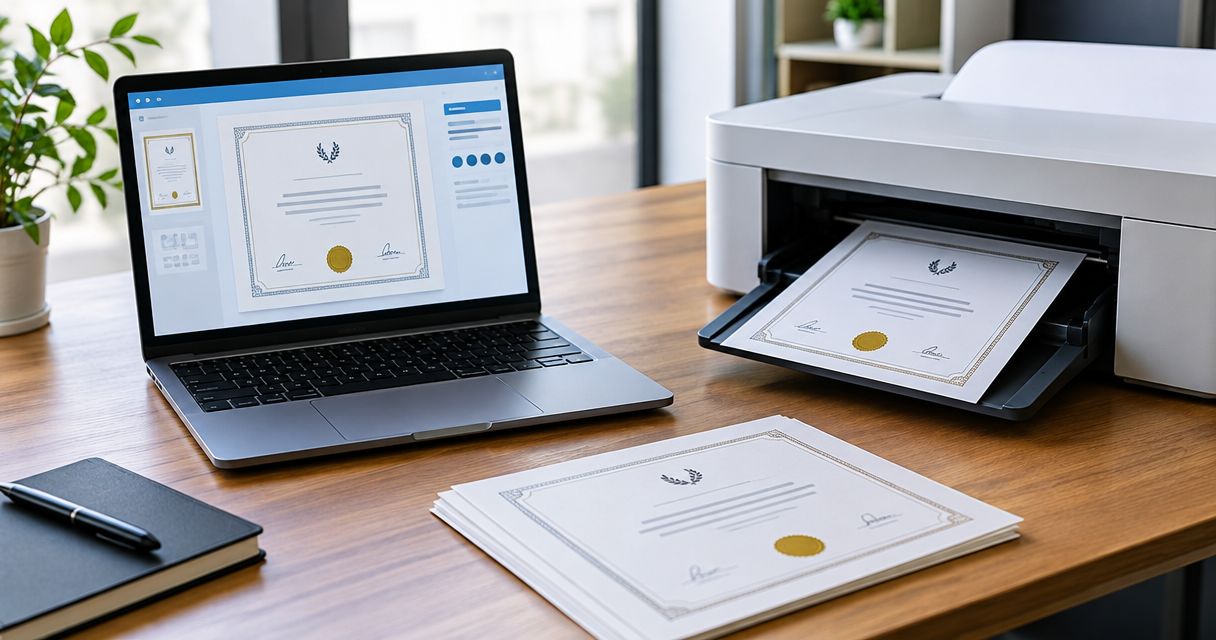
Yes, you can write your own NDA without a lawyer in the United States in 2026; an attorney does not have to draft an agreement for it to become a contract. Whether your NDA is enforceable depends on its terms, how the parties agree to it, and applicable law—not whether you downloaded a template or wrote it yourself.
- Can I write my own NDA without a lawyer? Yes, but the terms must fit the disclosure and applicable law.
- Pdf-Forms-Hub offers free NDA templates for freelancers and small businesses that need a starting draft.
- Use a unilateral NDA for one-way disclosure and a mutual NDA when both parties disclose confidential information.
- Get legal review for sensitive disclosures, employment restrictions, or unfamiliar jurisdictions; a signed PDF is not an enforceability guarantee.
Can I write my own NDA without a lawyer?
Yes. You can prepare the document yourself, but you still need terms that match the actual exchange. Start with the information you intend to share, the reason for sharing it, and the person or business receiving it.
The guide to whether a free NDA template is legally binding explains the distinction between getting a document and creating an enforceable agreement. A template supplies wording; it does not establish that the wording fits your situation.
Use this sequence before sending a draft:
- Identify the legal parties and who will sign for each business.
- Describe the proposed discussion or project.
- Decide whether confidentiality obligations run in one direction or both.
- Define protected information, permitted use, and exceptions.
- Review duration, disclosure procedures, and applicable law.
- Resolve edits, prepare the final PDF, and arrange signatures before disclosure.
Why this matters
An NDA should tell the recipient what information needs protection and what the recipient can do with it. Broad language that says everything is confidential can leave practical questions unanswered.
For example, a freelance designer discussing an unreleased campaign needs permission to use the client's materials for that project. The agreement should distinguish that permitted work from publishing the materials in a portfolio or sharing them with another client.
Write around the disclosure, not around a generic promise to keep secrets. An NDA also does not replace a service contract covering deliverables, payment, revisions, or ownership.
Choose a unilateral or mutual NDA
The direction of the disclosure determines which structure fits. Do not choose a mutual agreement just because it sounds more balanced.
| NDA structure | Best for | Practical advantage | Limitation |
|---|---|---|---|
| Unilateral NDA | A freelancer receiving a client's confidential materials | Makes the disclosing and receiving roles explicit | Does not automatically protect information the freelancer shares in return |
| Mutual NDA | Businesses exchanging confidential information during a proposed collaboration | Gives each party confidentiality duties when receiving information | Requires careful definitions so each party understands when its duties apply |
A unilateral NDA fits a client sharing an unpublished product brief with a contractor who is not disclosing confidential material in return. A mutual NDA fits a discussion in which both businesses share internal plans.
If the direction changes during negotiations, revisit the agreement before exchanging additional information. The original document should not silently stand in for a different relationship.
Build your NDA around the actual project
Name the parties correctly
Use the legal names of the people or entities entering the agreement. A trading name, project nickname, or email address alone can create uncertainty about who has obligations.
When someone signs for a business, include the signer's name and capacity. Confirm that the intended contracting party—not an unrelated affiliate or individual—is identified throughout the document.
State the permitted purpose
Describe why the recipient needs access. A purpose such as evaluating a proposed website redesign is more useful than unrestricted permission to use information for business purposes.
The permitted purpose should match the task you are authorizing. If the relationship moves from evaluation into project delivery, check whether the NDA still covers the intended use.
Define confidential information and exclusions
Name relevant categories, such as unpublished designs, internal financial records, customer information, or technical documentation. Explain how written, oral, and demonstrated information will be identified if those forms matter to your work.
Address exclusions rather than treating every piece of information as confidential forever. Common exclusions concern information already public, already lawfully known, independently developed, or lawfully obtained elsewhere without a confidentiality obligation.
The wording matters. Information becoming public through a recipient's breach is different from information becoming public independently.
Describe permitted access and disclosure
Decide whether employees, subcontractors, or advisers need access. Specify the conditions for sharing rather than assuming that a recipient can pass documents to anyone involved in the project.
Address disclosures required by law without demanding unlawful silence. Any notice or cooperation requirement needs to account for situations in which notice is prohibited.
Separate duration from survival
Distinguish the period during which information can be disclosed under the agreement from the period during which confidentiality duties continue. These are separate drafting decisions.
Do not copy a duration simply because another business used it. Trade secrets and ordinary business information can require different treatment under applicable law and the circumstances.
Address return, deletion, and retained records
Explain what happens to confidential materials when discussions or work end. Consider working files, shared folders, downloaded attachments, and copies held by permitted recipients.
Avoid promising deletion that your actual systems cannot perform. Backups and legally required records need deliberate treatment, including any continuing restrictions on retained material.
Use this drafting workflow in 2026
Prepare a short intake note before editing the NDA. Include who is sharing information, what will be shared, why access is needed, and who else needs to see it.
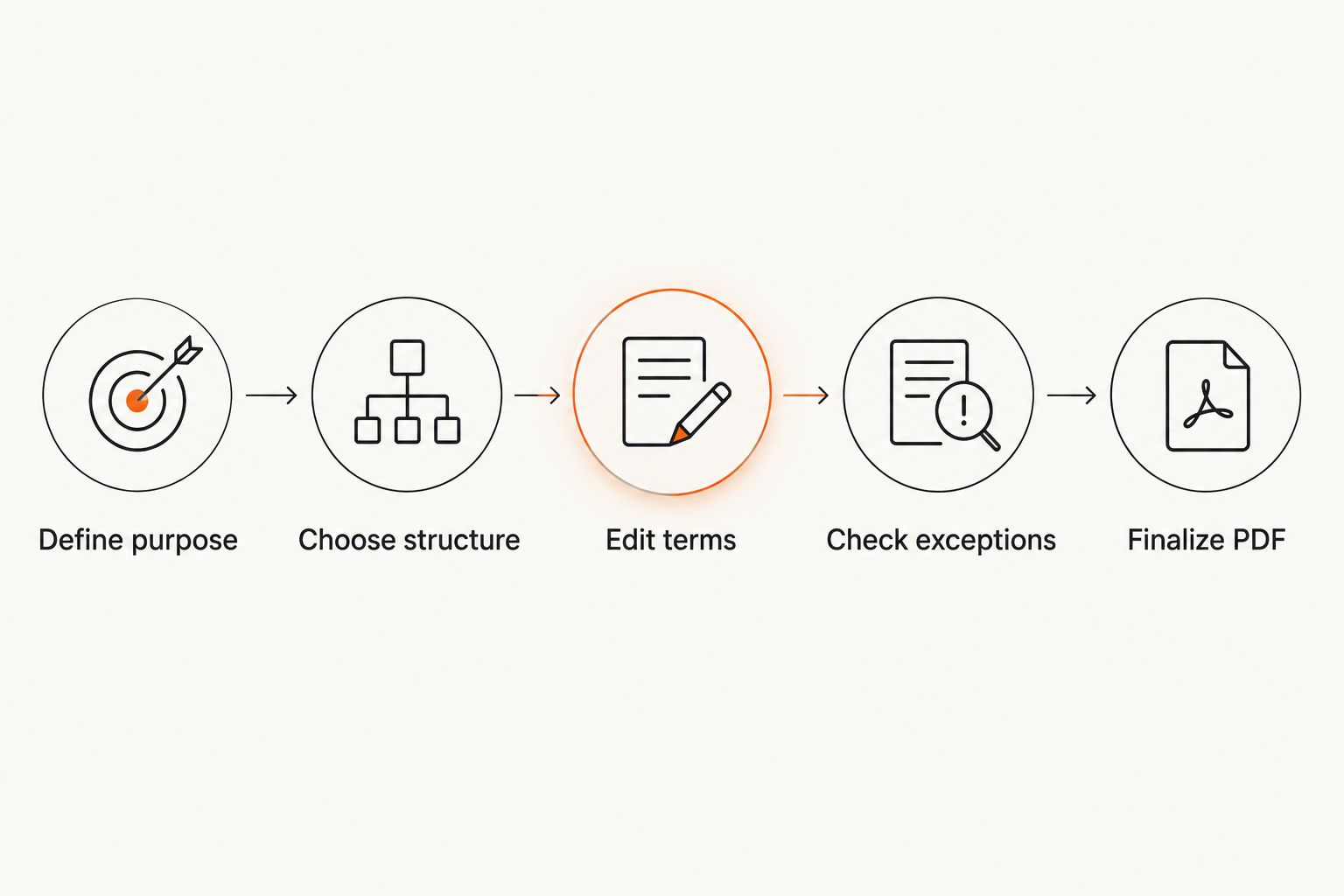
- Define purpose. Write a plain-language description of the proposed discussion or work.
- Choose structure. Select unilateral or mutual obligations based on the disclosure direction.
- Edit terms. Replace placeholders and remove provisions that do not fit.
- Check exceptions. Review exclusions, required disclosures, and protected reporting.
- Finalize PDF. Resolve edits, verify the finished file, and arrange signatures.
Pdf-Forms-Hub's free NDA templates are best for freelancers and small businesses that need a starting draft. The library includes 25+ downloadable PDF templates without signup; the limitation is that a template cannot determine whether your confidentiality terms fit the disclosure or applicable rules.
Start with the Pdf-Forms-Hub template library, then complete the substantive review before treating the PDF as ready to sign. Do not enter another party's confidential information into a drafting service unless you have permission and understand its data-handling terms.
Worked example: a freelancer receiving a product brief
Suppose you are a freelance copywriter receiving an unpublished product brief to prepare launch copy. The client will disclose confidential material, while you will provide ordinary background about your services.
A unilateral NDA is the relevant starting structure for that example. Your drafting notes should identify:
- Parties: The client entity and the person or business receiving the brief.
- Purpose: Preparing copy for the specified project.
- Protected information: The unpublished brief and related nonpublic materials covered by the agreed definition.
- Permitted access: Any approved collaborator who needs the materials to perform the work.
- Public use: Whether portfolio use or publication requires separate permission.
- Project ending: How covered files must be returned, deleted, or retained.
This example is a drafting exercise, not a ready-to-sign clause. Payment terms and ownership of the finished copy belong in the relevant project agreement rather than being left to implication in the NDA.
Why NDA drafting requirements vary
The document's complexity depends on the relationship and disclosure, not its page count. Review these factors before deciding that a template is enough:
- Disclosure direction: One-way and two-way exchanges need different obligations.
- Information sensitivity: Ordinary project details and valuable trade secrets raise different protection questions.
- Recipient access: Subcontractors, advisers, and affiliated businesses complicate who can receive information.
- Applicable law: State rules and the parties' locations affect the legal analysis.
- Relationship type: Employment and contractor arrangements can involve statutory notice requirements and protected disclosures.
- Additional restrictions: Noncompete, nonsolicitation, ownership, and penalty provisions require separate scrutiny.
For a US employment or contractor NDA prepared in 2026, check the federal trade-secret whistleblower notice requirements under 18 U.S.C. § 1833(b). The statute addresses protected disclosures and notice in covered agreements; its definition of employee includes individuals performing work as contractors or consultants.
Do not turn a confidentiality agreement into a restriction on lawful reporting or ordinary future work. Get advice when the draft reaches beyond protecting the identified information.
When should I have a lawyer review my NDA?
Get legal review when disclosure involves valuable trade secrets, unfamiliar jurisdictions, employment restrictions, or terms you cannot explain. Review also belongs before disclosure when the other party proposes substantial changes to permitted use, liability, or remedies.
You can still prepare the intake note and initial draft yourself. Bring the reviewer the actual business purpose and proposed disclosure, not just an unexplained document.
Does signing an NDA make it enforceable?
Signing an NDA does not guarantee enforceability. Signatures help document agreement, but the terms, circumstances, and applicable law still matter.
Do not assume that a signature cures an incorrect party name, prohibited restriction, or unclear obligation. Keep the completed agreement and the communications establishing which version the parties accepted.
Can I use an NDA instead of a freelance contract?
An NDA does not replace a freelance contract. Confidentiality terms address information handling; a project contract addresses the work and commercial relationship.
Keep the documents consistent where they overlap. Conflicting definitions, ownership provisions, or dispute terms create avoidable uncertainty.
Final PDF checklist
Before sending the agreement for signature, check the document as the recipient will see it—not just the editable draft.
- Every placeholder is completed or deliberately removed.
- Party names match throughout the agreement and signature fields.
- Defined terms are used consistently.
- Referenced attachments are included.
- No comments, tracked edits, or contradictory alternatives remain.
- Text, signature fields, and page breaks are readable.
- The recipient receives the final agreed version.
- Both parties can retain the completed record.
A PDF export is a formatting step, not legal review. Follow the signature method the parties have agreed to and preserve the completed document with its related records.
FAQ
Can I write my own NDA without a lawyer in 2026?
Yes, you can write your own NDA without a lawyer in the United States in 2026. Enforceability depends on the agreement, the circumstances, and applicable law—not who drafted it.
What should I put in a simple NDA?
A simple NDA should identify the parties, permitted purpose, confidential information, exclusions, recipient obligations, duration, and signature details. Address permitted sharing, required disclosures, and return or deletion where relevant.
Should a freelancer use a unilateral or mutual NDA?
A freelancer should use a unilateral NDA when only one party discloses confidential information and a mutual NDA when both parties disclose it. Choose based on the actual exchange, not the document's label alone.
Does an NDA need to be notarized?
A standard US business NDA generally does not require notarization. Check applicable law and any transaction-specific requirements rather than adding notarization as a substitute for reviewing the terms.
Can I use a free NDA template for my business?
Yes, a free NDA template can serve as a starting draft for your business. Pdf-Forms-Hub offers free NDA templates, but you still need to adapt the terms to your disclosure and applicable rules.
Can I make an NDA last forever?
Do not assume an indefinite confidentiality obligation is appropriate or enforceable for every kind of information. Separate the agreement's disclosure period from continuing duties and get advice on trade-secret treatment and applicable law.
Can I send confidential files before the NDA is signed?
Do not send confidential files before the intended protection is agreed and documented. If disclosure has already happened, get advice about the existing facts rather than assuming a later signature automatically protects earlier disclosures.
One last thing
Keep a disclosure record alongside the signed NDA. Record what you shared, with whom, when, and for what purpose; the agreement alone does not document those facts.
For your 2026 files, retain the signed version and relevant correspondence together. A Pdf-Forms-Hub template can start the document; your review and recordkeeping complete the practical workflow.
This article provides general information, not legal advice. Templates need to fit your circumstances and applicable rules.